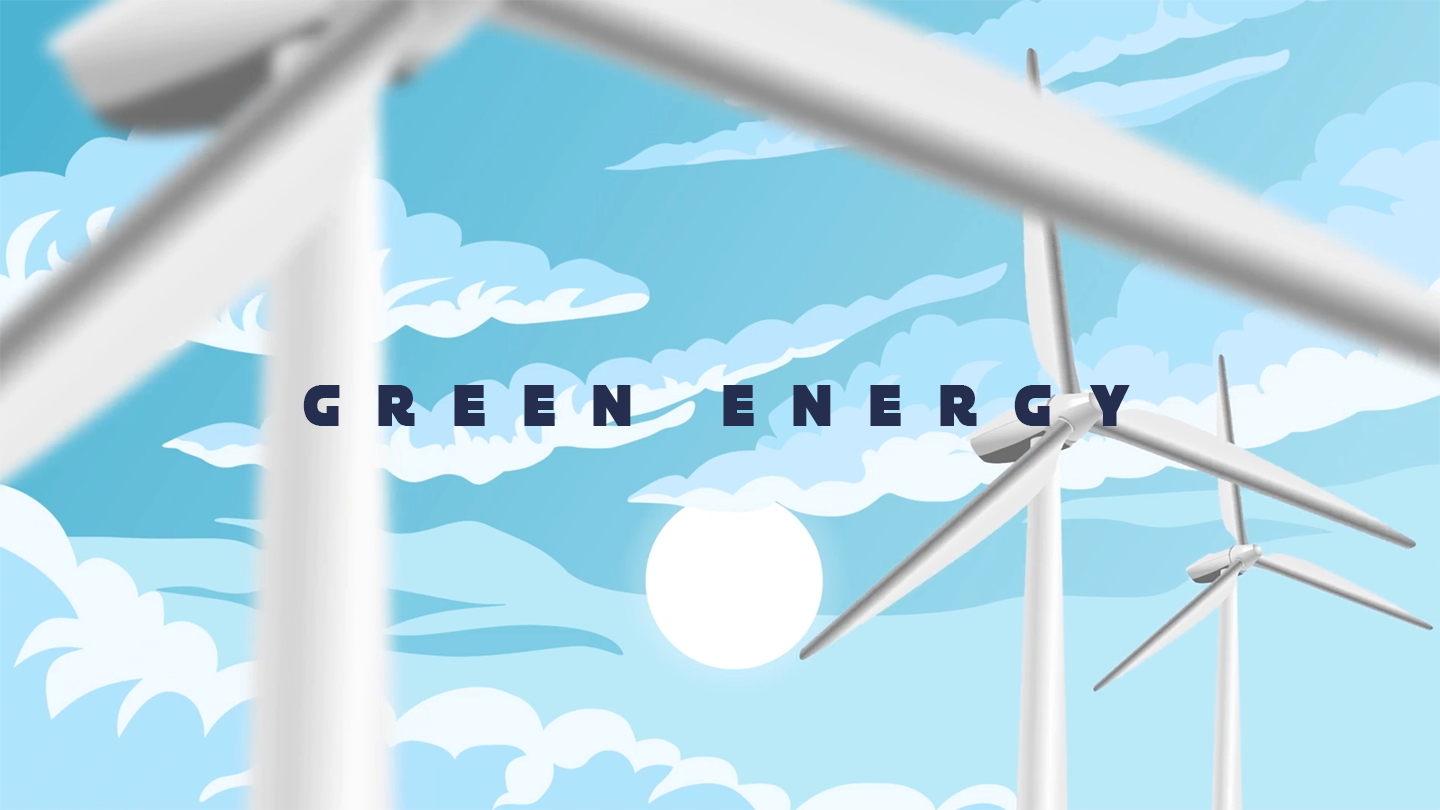
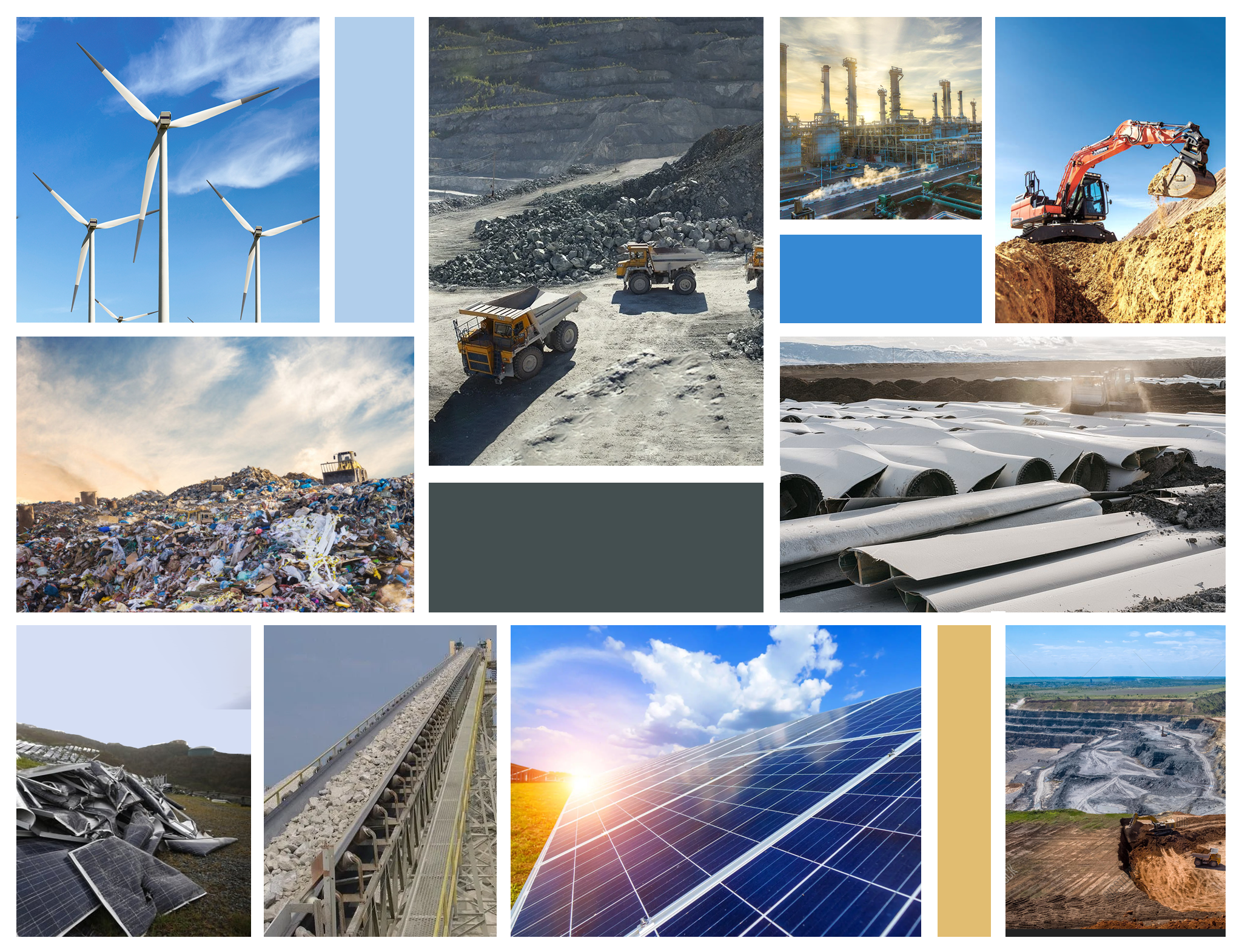
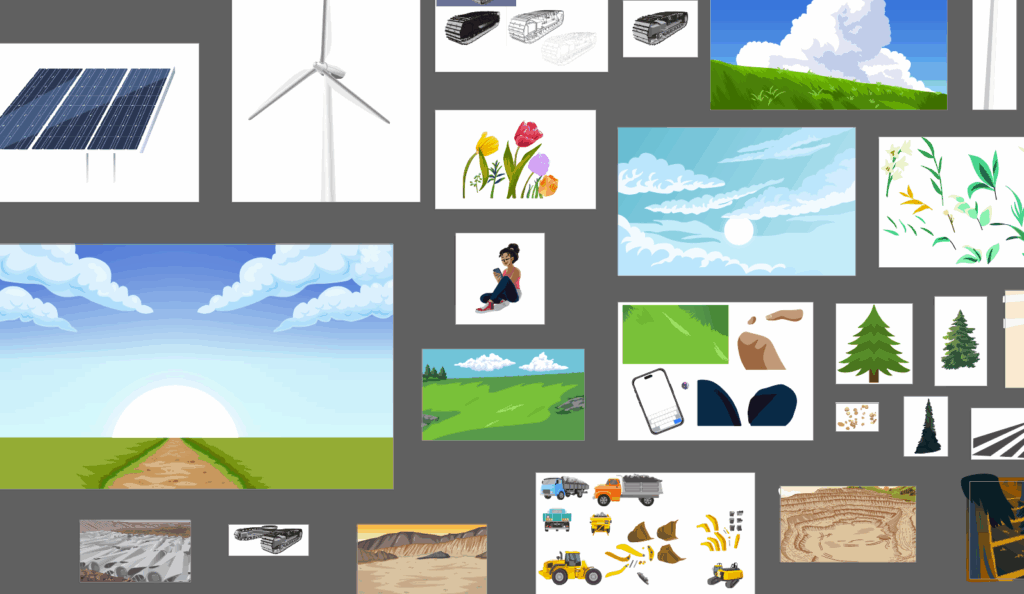
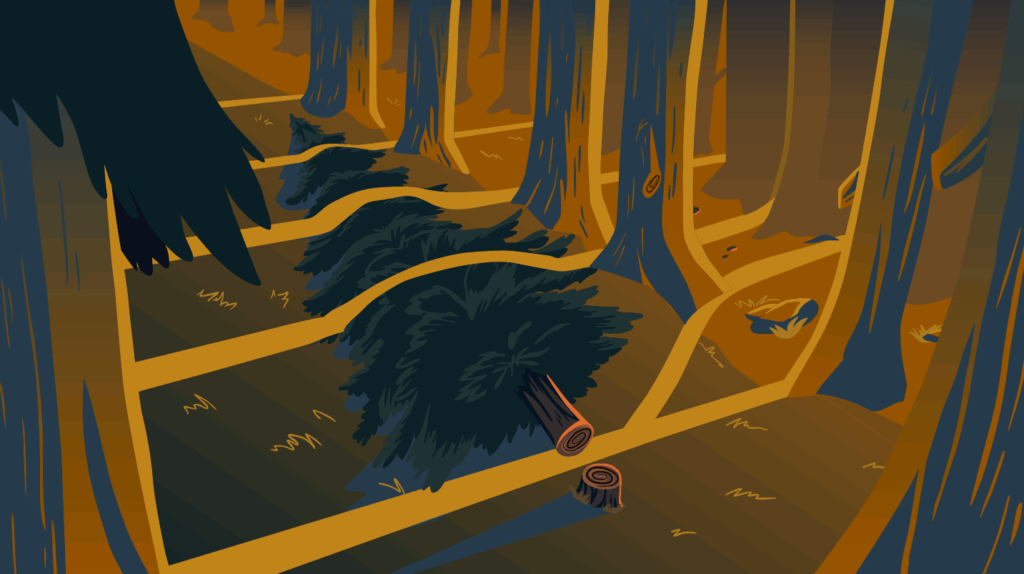
We did a project as part of an animation course on the topic of green energy. While most projects tackled its benefits, I took a more critical approach—examining the overlooked downsides to green energy technologies, such as environmental costs of production, land use, and the lifespan of renewable technology.
The task was to create a short animation (under 2 minutes) that conveyed a message relating to green energy. We were instructed to be imaginative with the topic, and I decided to subvert the viewer’s expectations by revealing the less-contested consequences of green technology.
Research & Scripting
Before animating, I spent a lot of time researching the lesser-known environmental and ethical concerns surrounding green energy technologies. The goal was to have a well-balanced, considered script that went beyond the generic “clean and renewable” message. I wrote scripts on concerns such as:
The mining required for lithium and rare earth elements
Disposal issues for solar panels and turbines
Land use implications of large wind and solar farms
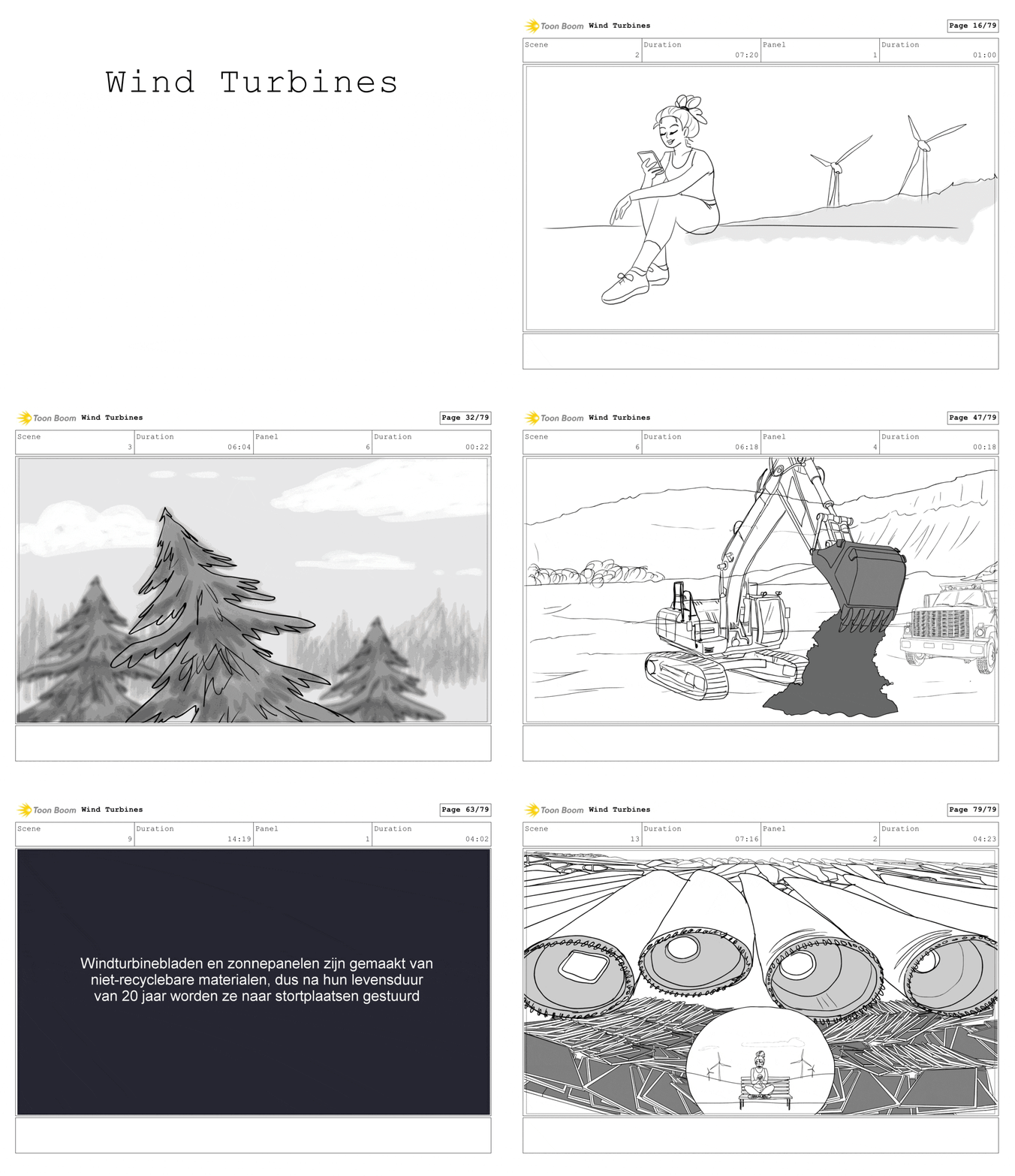
Storyboarding & Concept Design
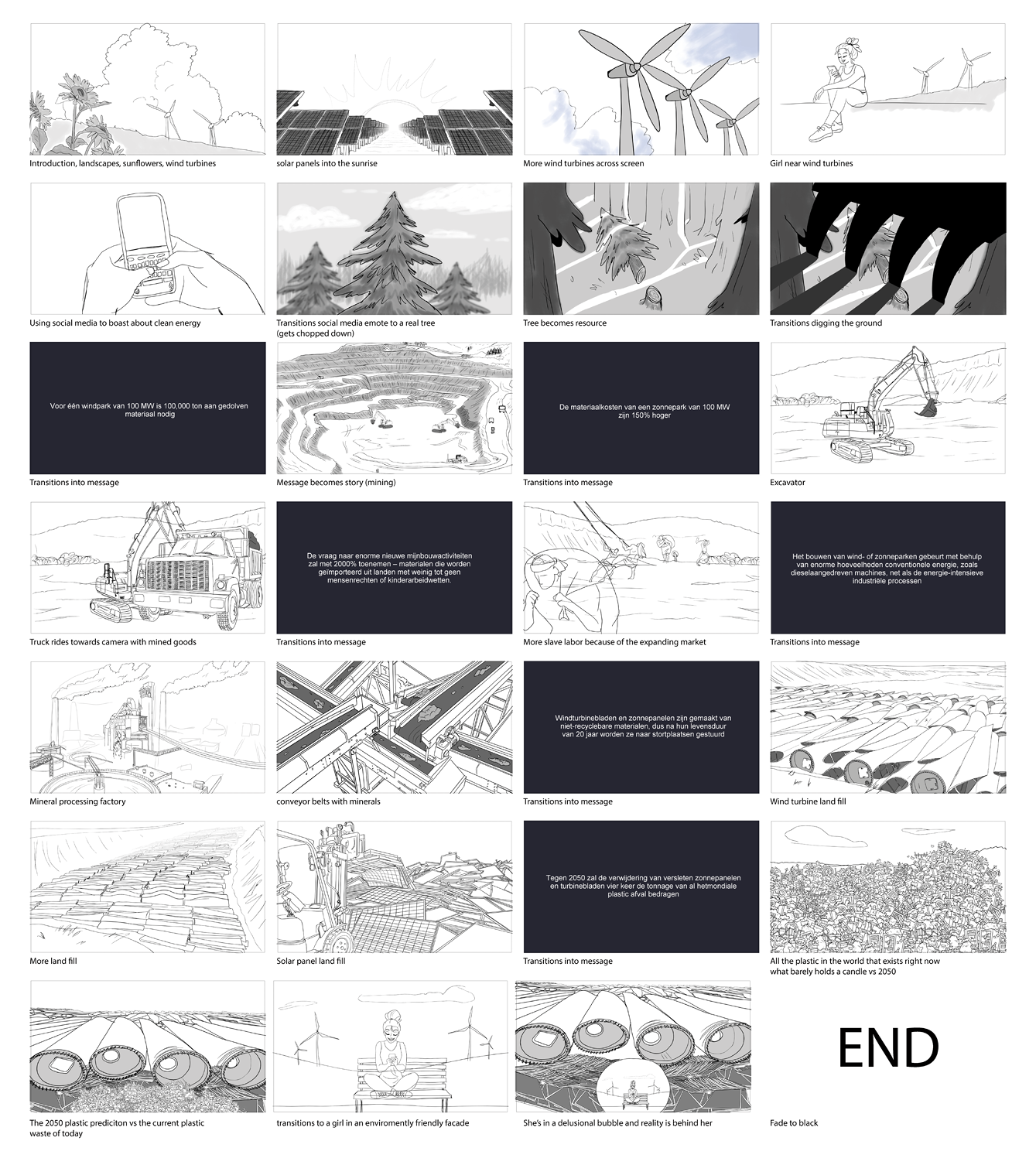
The overarching concept was “Surface vs. Reality” — how green energy sounds wonderful on the surface, but a closer look raises environmental, ethical, and sustainability concerns. I wanted every scene to be a “flip” from one reality to another.
The storyboard was broken down into three main sections:
The Idealized World (Opening – 0:00 to 0:22)
The Hidden Reality (Midsection – 0:23 to 1:30)
The Takeaway (Ending – 1:31 to 1:47)
Design & Animation
Once the script and storyboard were done, I proceeded into the visual production phase. I was tasked to create a design look that would appear attractive at first glance, but capable of expressing discomfort and complexity when the animation transitioned into the bleak realities of green energy.
All assets were created in Adobe Illustrator with layered structures to prepare for animation.
Animation Workflow
Software Used: After Effects Frame Rate: 24 fps
Techniques Used:
Motion Graphics & Masking
Morph Transitions
Symbolic Animations
Cinematic Camera Movement
Outcome
The final animation took 1:47 minutes, and it effectively stimulated debate in the classroom on the sophistication of green energy. The animation was praised for its blunt narrative and forceful application of contrast and timing. I was especially pleased with how the tone shift was both visually and aurally delivered.
What I Learned
How to approach a topic from an unconventional viewpoint
Balancing visual storytelling with educational content
Using color, tone, and transitions to deliver layered messages
That challenging perspectives can be powerful, but requires careful framing